Nothing gold can stay
Nothing gold can stay is a short lyric poem by Robert Frost that Ponyboy Curtis recites from memory to Johnny Cade during their fifth day hiding in the Jay Mountain church. The poem's meditation on transience becomes the novel's most resonant thematic statement, linking the boys' lost innocence to the larger tragedy of their lives.
The Poem and Its Recitation
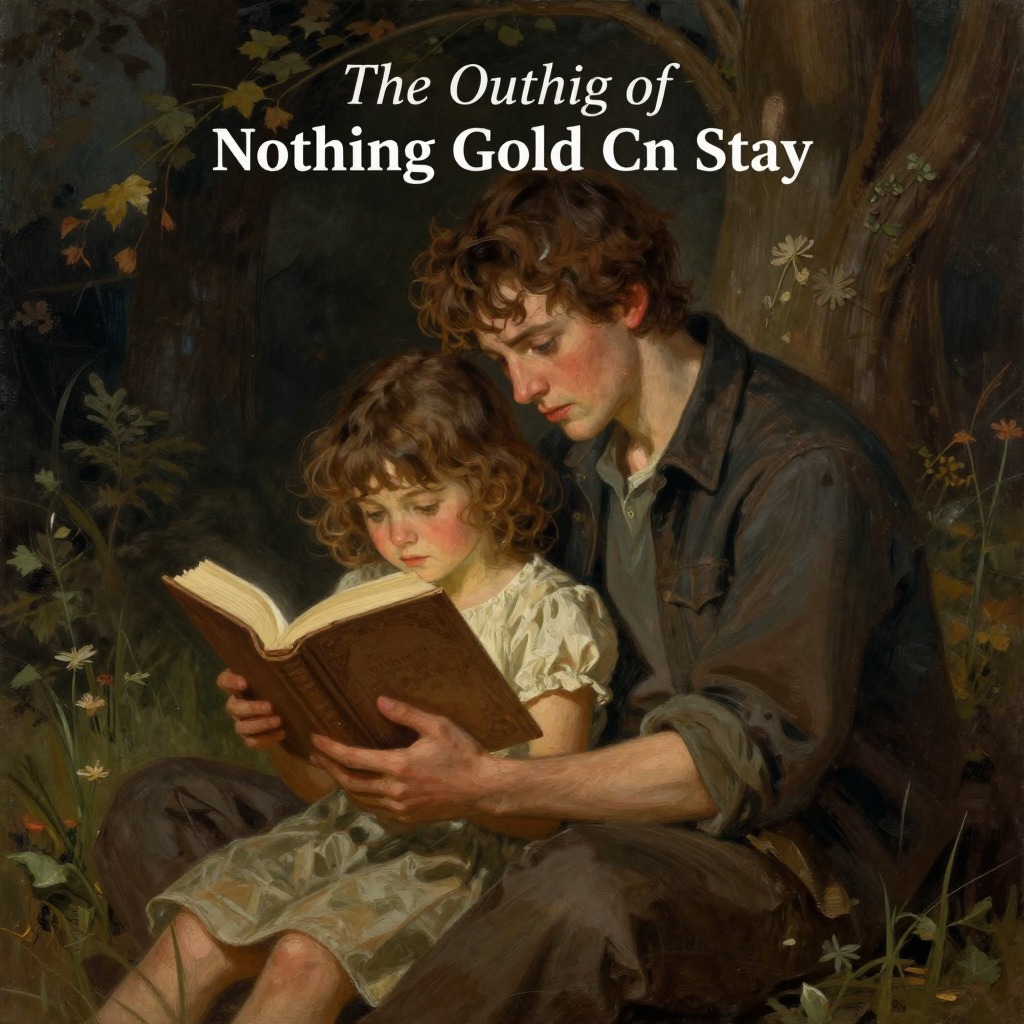
On the fifth morning of their concealment, Ponyboy wakes early and goes to sit on the back steps of the church to smoke a cigarette. The dawn is breaking over the valley, and he watches the mist turn gold and silver in the rising sun. Johnny joins him and remarks, "The mist was what was pretty. All gold and silver." Ponyboy responds by reciting Frost's poem from memory: "Nature's first green is gold, / Her hardest hue to hold. / Her early leaf's a flower; / But only so an hour. / Then leaf subsides to leaf. / So Eden sank to grief, / So dawn goes down to day. / Nothing gold can stay." Johnny is struck by the lines and asks where Ponyboy learned them. Ponyboy explains that Robert Frost wrote the poem and admits he has never fully understood what the poet meant by it. Johnny, however, grasps the meaning intuitively: "That was what I meant," he says, connecting the poem to the beauty of the dawn they have just witnessed.
Thematic Significance and Character Insight
The recitation reveals a deep difference between Ponyboy and the other greasers. Ponyboy tells Johnny that he could not share the poem with Two-Bit, Steve, or even Darry because "they just don't dig." Only Johnny and Sodapop—and perhaps Cherry Valance—would understand. Johnny responds, "I guess we're different." The poem thus becomes a marker of the sensitivity and awareness that set Ponyboy and Johnny apart from their hardened peers. It also deepens their bond: Johnny, who has failed a year in school and is often dismissed as slow, grasps the poem's meaning more readily than Ponyboy, who is considered the "deep one." Ponyboy reflects that Johnny "could get more meaning out of some of the stuff in there than I could."
Johnny's Letter and the "Stay Gold" Motif
The poem's final and most powerful recurrence comes after Johnny's death. In the hospital, Johnny leaves Ponyboy a note inside a copy of Gone with the Wind. The note references the Frost poem directly: "I've been thinking about it, and that poem, that guy that wrote it, he meant you're gold when you're a kid, like green. When you're a kid everything's new, dawn. It's just when you get used to everything that it's day. Like the way you dig sunsets, Pony. That's gold. Keep that way, it's a good way to be." Johnny's interpretation transforms the poem from a lament about loss into a charge to preserve innocence and wonder. His dying words to Ponyboy—"Stay gold, Ponyboy. Stay gold"—echo the poem's title and become the novel's final moral instruction. The phrase "stay gold" enters the vocabulary of the story as a shorthand for holding onto the capacity for beauty, hope, and goodness in a world that conspires to crush them.
Narrative and Structural Role
The poem functions as a structural and thematic anchor for the novel. Its recitation in Chapter 5 marks the quietest, most reflective moment of the boys' hideout, a brief idyll before the violence of the church fire and the rumble. The poem's theme of inevitable loss—"So Eden sank to grief, / So dawn goes down to day"—prefigures Johnny's death and Dally's suicide, both of which occur within days. The novel itself ends with Ponyboy beginning to write his English theme, which is the story the reader has just read, and the opening line of that theme is the same sentence that opens the novel: "When I stepped out into the bright sunlight from the darkness of the movie house, I had only two things on my mind: Paul Newman and a ride home." This circular structure enacts the poem's idea that dawn gives way to day, but also suggests that Ponyboy has chosen to "stay gold" by telling the story, preserving the memory of Johnny and the truth of their lives.